


Quite literally. Translation is my profession, but it’s also my hobby horse. So are horses. No wonder my radar is always on for translations about horses, riding, breeding and equine welfare.
Some time ago, a lovely children’s book landed on my desk – a comic called Horse Trouble. I’ve written about it before, because although it’s a comic for children, it deals with things many adults struggle with: self-esteem, effort and how we handle failure.
This time, though, I’m looking at it from a different angle – as a linguist. You’d think a horse comic for young readers wouldn’t hide any traps. That’s the first wrong assumption: children’s literature needs a fine ear, because a child will catch a false note faster than any adult. The second is that horse-riding vocabulary is a real challenge for a translator. Unless the translator practically lives in the barn.
What’s in a name?
The problem is that some expressions, riding disciplines and elements of the sport have no Polish equivalents, and probably never will.
First, a bit of history. Riding vocabulary largely comes from the English tradition, as do most equestrian sports. Dressage is the exception: it speaks French – volte, piaffe, passage. Basic coat colours, tack and the main disciplines translate more or less directly. But dig a little deeper and the picture turns grey – and not only the horses.
Take the first pied horse you see. In Polish, we have one word for it: srokaty, our good old patchwork horse. In English, you need to know more. A Brit tells a piebald (black and white) from a skewbald (any other colour and white). An American says pinto and then specifies the pattern: tobiano, overo or tovero. Overo then splits into frame, sabino and splashed white, and some add the pintaloosa, a pinto with Appaloosa spots. Good luck keeping up.
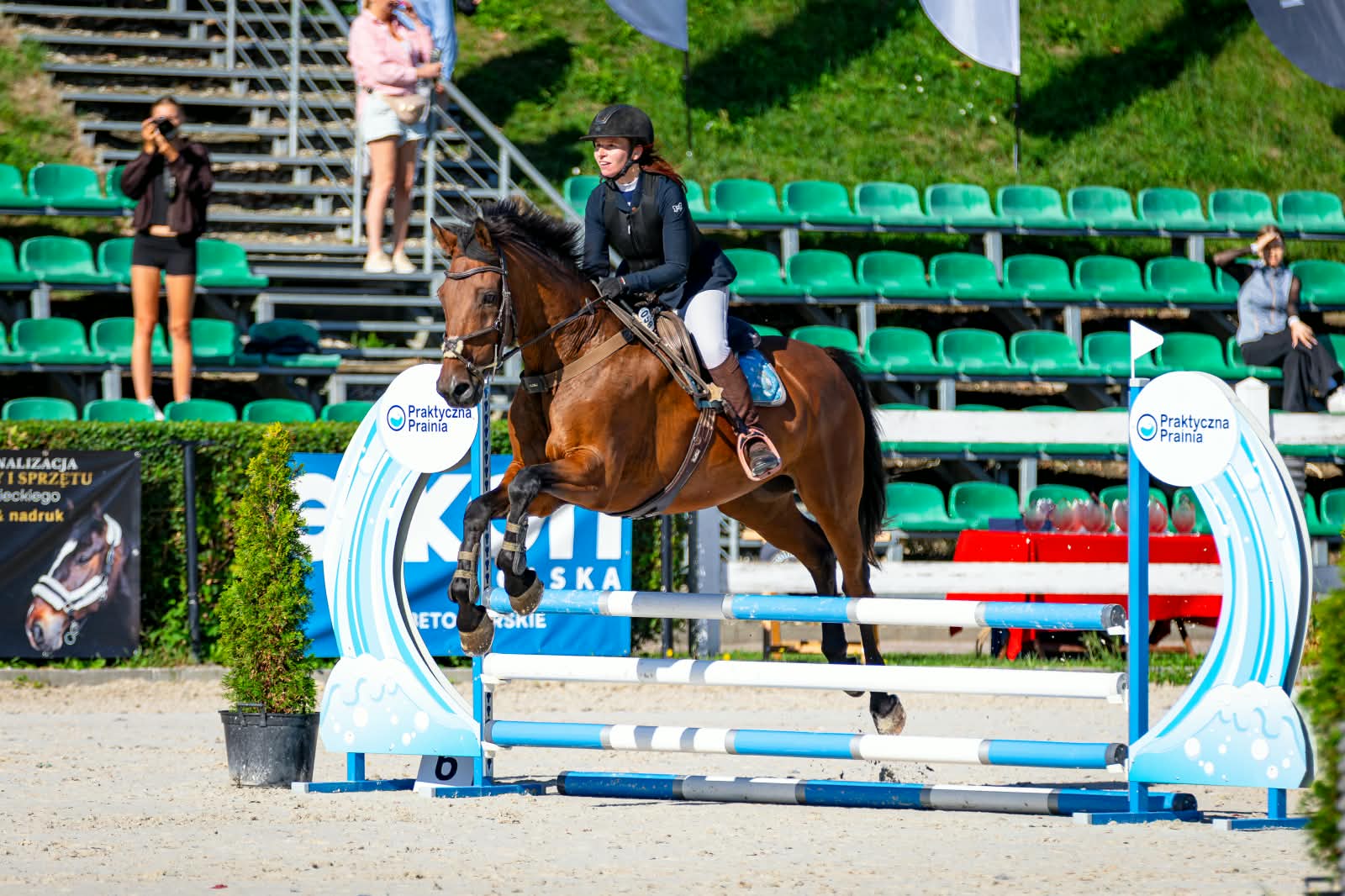
Riding disciplines are no easier. In the comic, published in Poland as Wszystko pod końtrolą (a pun on ‘everything under control’, with koń, the Polish for horse, galloping into the middle of the word), I came across a way of dividing horse-show classes that doesn’t exist in Poland. The heroine had three to choose from: hunter, jumper and equitation. In jumper classes, it’s all about time and faults, as in our show jumping. In hunter classes, the judge assesses the horse: rhythm, jumping style, calm. In equitation, only the rider is judged.
In Poland, we compete in show jumping, dressage or eventing – which we call WKKW, short for Wszechstronny Konkurs Konia Wierzchowego, the All-Round Competition for the Riding Horse. Within show jumping, we have categories such as open, amateur, juniors, seniors and other age groups. Equitation has a Polish counterpart in classes judged on the rider’s style. But we don’t separate hunters from jumpers – for us, both are simply show jumping.
Straight from a horse’s mouth – in Poland and abroad
To give Polish its due, though, we have a few terms the rest of the world could learn from. We may have borrowed ‘bombproof’ horses from English sale ads, but we came up with the koń-profesor ourselves: where an English yard has a mere schoolmaster, we went straight for a professor.
English has its greys, of course, but compare the pictures. Our siwy jabłkowity is a grey ‘in apples’, while the English dapple grey is merely spotted. Our siwy hreczkowaty is sprinkled with buckwheat, while his English cousin is a flea-bitten grey. Flea bitten, poor guy.
English doesn’t have its own word for dressage either – it borrowed one from French, while Polish has ujeżdżenie. And for kulbaka, the cavalry saddle, English has no single word and has to describe it.
So we can safely say what the 16th-century poet Mikołaj Rej once said: Poles are not geese – they have a language of their own. And, I’d add, they’re not ponies either.
I’ve quoted just a few examples, mostly from classical riding. Then again, tobiano and overo already belong to American breed registries, so Western riding has peeked into this post through the half-open stable door. But Western has a vocabulary of its own, from reining to rowel spurs, and it deserves a post of its own 😊